
 Save
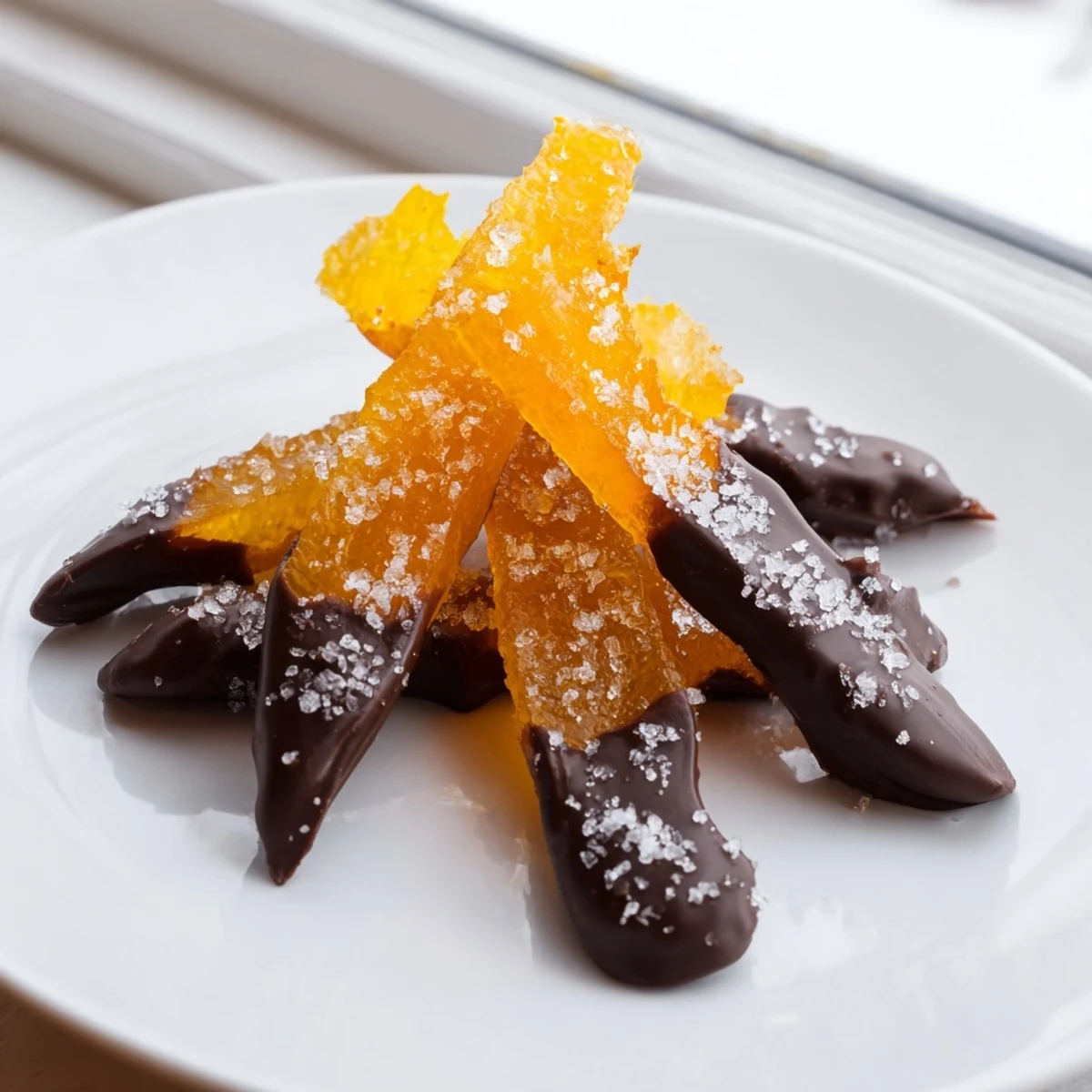
Save These chocolate covered orange peels transform simple citrus into an elegant confection. Fresh orange peel is blanched to remove bitterness, then slowly simmered in sugar syrup until translucent and tender.
Once dried, each candied strip is dipped halfway into melted dark chocolate and left to set. A sprinkle of flaky sea salt adds a sophisticated finish.
The result is a beautifully glossy, zesty-sweet treat with a satisfying chew and a crisp chocolate shell. Perfect for holiday gifting, dessert boards, or an afternoon indulgence with coffee.
The smell of oranges and bubbling sugar syrup on a cold afternoon is enough to make anyone slow down and linger in the kitchen. My neighbor Elaine once handed me a small box of chocolate dipped orange peels after a holiday dinner, and I spent the entire drive home sneaking pieces from the box instead of waiting. They were bitter and sweet and impossibly elegant, and I knew immediately I had to learn to make them myself. That winter turned into a long affair with citrus and dark chocolate that has never really ended.
I made a double batch one February and packed them into little kraft paper bags for coworkers. A man in accounting who never spoke to me appeared at my desk the next morning asking if there were any left, and whether I took orders.
Ingredients
- 3 large oranges: Use thick skinned navel oranges if you can find them because the peel holds up beautifully during candying and gives you more to bite into.
- 1 cup (200 g) granulated sugar: Plain white sugar creates a clear, clean syrup that lets the orange flavor shine without muddying it.
- 1 cup (240 ml) water: Combined with the sugar to form the candying syrup that transforms tough peels into translucent jewels.
- 200 g high quality dark chocolate (at least 60% cocoa): Do not skimp on the chocolate here because it carries half the flavor and anything waxy or cheap will ruin the effect.
- 1 tsp flaky sea salt (optional): A few flakes on each piece adds a subtle crunch and rounds out the sweetness in a way that surprises people.
Instructions
- Prep the oranges:
- Wash the oranges thoroughly under warm water, then score each peel from top to bottom in four vertical cuts. Gently pry the peel away in large pieces, keeping a thin layer of white pith attached because it adds that characteristic texture.
- Cut into strips:
- Slice the peels into even strips about half a centimeter wide so they candy uniformly and look tidy when dipped.
- Blanch the bitterness away:
- Pile the strips into a saucepan, cover with cold water, and bring it to a full boil for two minutes before draining. Repeat this two more times and you will notice the water becoming less cloudy each round as the harsh bitterness cooks out.
- Make the syrup:
- Combine the sugar and water in the same saucepan and bring it to a gentle simmer, stirring until every grain dissolves and the liquid runs clear.
- Candy the peels:
- Slide the blanched strips into the simmering syrup and let them cook gently for about forty minutes, stirring once in a while, until they look glassy and translucent around the edges.
- Dry them out:
- Lift the peels out with tongs and arrange them on a wire rack set over parchment paper so air can circulate underneath. Give them at least an hour to become tacky rather than wet to the touch.
- Melt the chocolate:
- Set a heatproof bowl over a pan of barely simmering water and stir the chocolate until it melts into a smooth, satiny pool with no lumps remaining.
- Dip and finish:
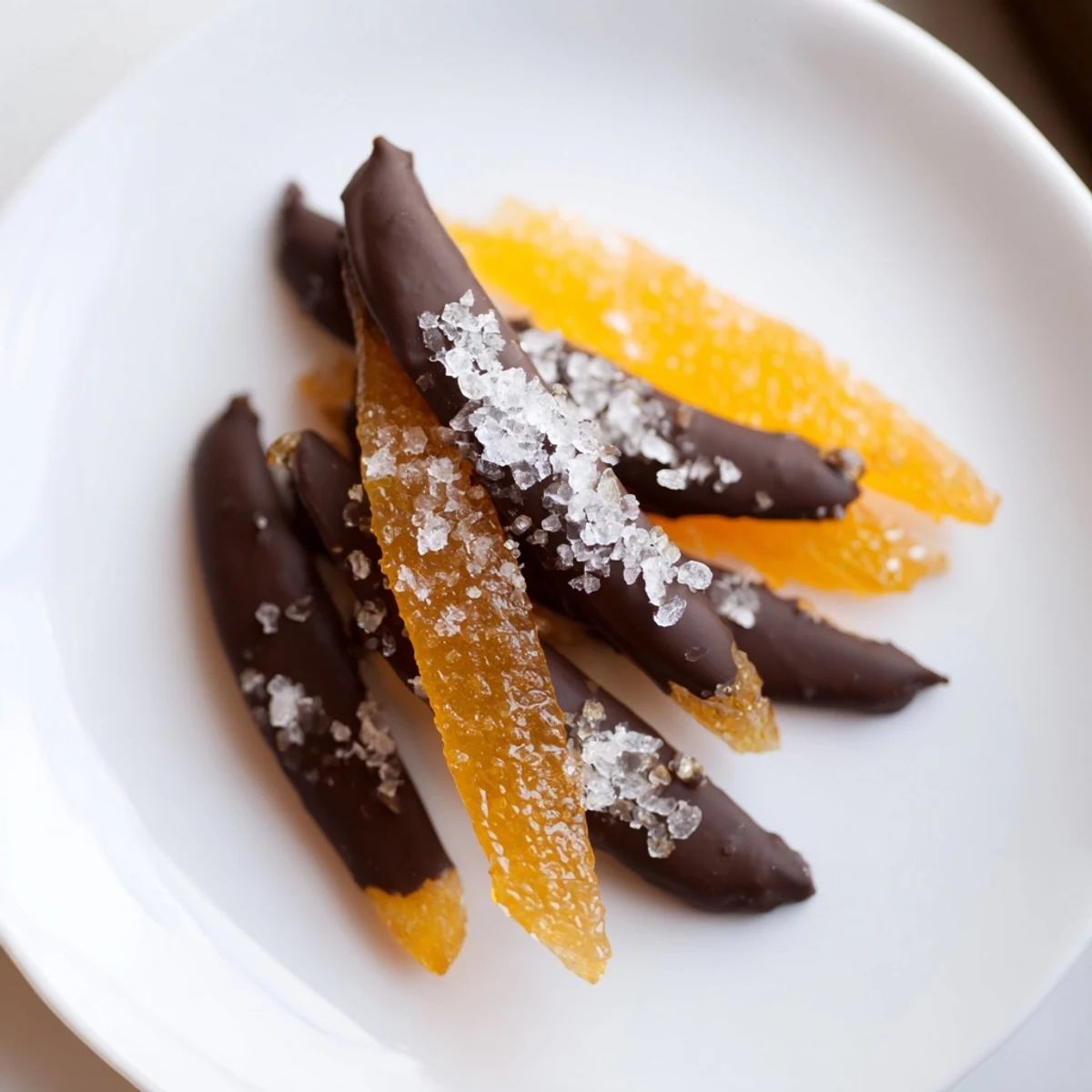
- Hold each strip by one end and dip it halfway into the chocolate, letting the extra drip back into the bowl before laying it on fresh parchment. Sprinkle with flaky salt while the chocolate is still wet, then leave everything alone for about thirty minutes until fully set.
 Save
Save There is something meditative about standing at the counter dipping strip after strip, watching the chocolate set into a quiet shine, knowing each one is a small gift you made by hand.
Working with Citrus Peels
The white pith is where most of the bitterness lives, but removing all of it leaves you with papery, flavorless strips. I find that leaving a thin cushion of pith, roughly a millimeter, gives the best chew and just enough of that grown up bitter edge to balance the sugar.
Choosing and Handling Chocolate
A bar with at least sixty percent cocoa will give you a deep, clean snap that pairs well with the sticky sweetness of the candied peel. If you want an extra glossy finish, tempering the chocolate is worth the effort, but a simple melt works beautifully for home batches that disappear within a few days.
Storing and Gifting
These keep remarkably well in an airtight container at room temperature for up to two weeks, which makes them ideal for gifting. I layer them between sheets of parchment so the chocolate does not smudge.
- Avoid refrigerating them because condensation will dull the chocolate and soften the texture.
- Grapefruit and lemon peels work beautifully with the same method if you want to mix things up.
- Always check your chocolate label for allergen traces if you are sharing with others.
 Save
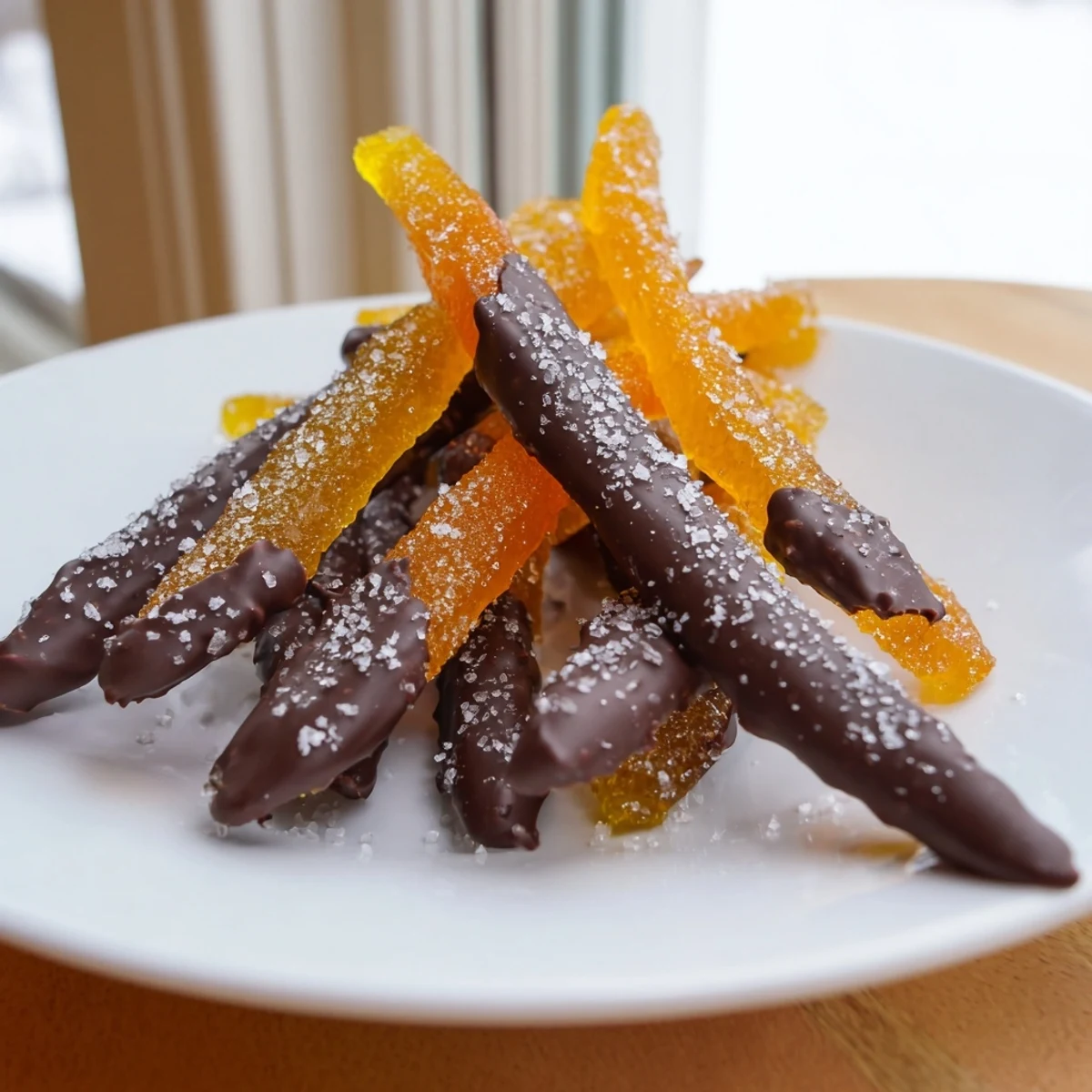
Save Every time I make these, I think about how something so satisfying can come from what most people throw away. That might be the best part of all.
Recipe FAQs
- → Can I use milk chocolate instead of dark chocolate?
-
Yes, milk chocolate works well if you prefer a sweeter, creamier coating. Keep in mind that milk chocolate is softer at room temperature, so you may want to refrigerate the finished peels briefly to help the chocolate set firmly.
- → How do I reduce the bitterness in orange peels?
-
The key is blanching. Boil the peels in fresh water for 2 minutes, drain, and repeat this process two more times. Each blanching draws out bitter compounds from the white pith, leaving a milder, more pleasant flavor.
- → How should I store chocolate covered orange peels?
-
Store them in an airtight container at room temperature for up to 2 weeks. If your kitchen is warm, you can refrigerate them, but bring them back to room temperature before serving for the best texture and flavor.
- → Can I use other types of citrus for this technique?
-
Absolutely. Grapefruit, lemon, and Meyer lemon peels all work beautifully with the same candying and dipping method. Each citrus variety brings its own unique balance of sweetness, tartness, and aromatic oils.
- → Do I need to temper the chocolate for dipping?
-
Tempering is not strictly necessary, but it gives the chocolate a glossy finish, a firm snap, and better stability at room temperature. If you skip tempering, the chocolate will still taste delicious but may appear slightly dull or soften more easily.
- → Why are my candied peels not becoming translucent?
-
Transparency comes from patient, gentle simmering in the sugar syrup. Make sure the syrup stays at a low simmer rather than a rolling boil, and give the peels the full 40 minutes. Thin, uniform strips also candy more evenly.