
 Save
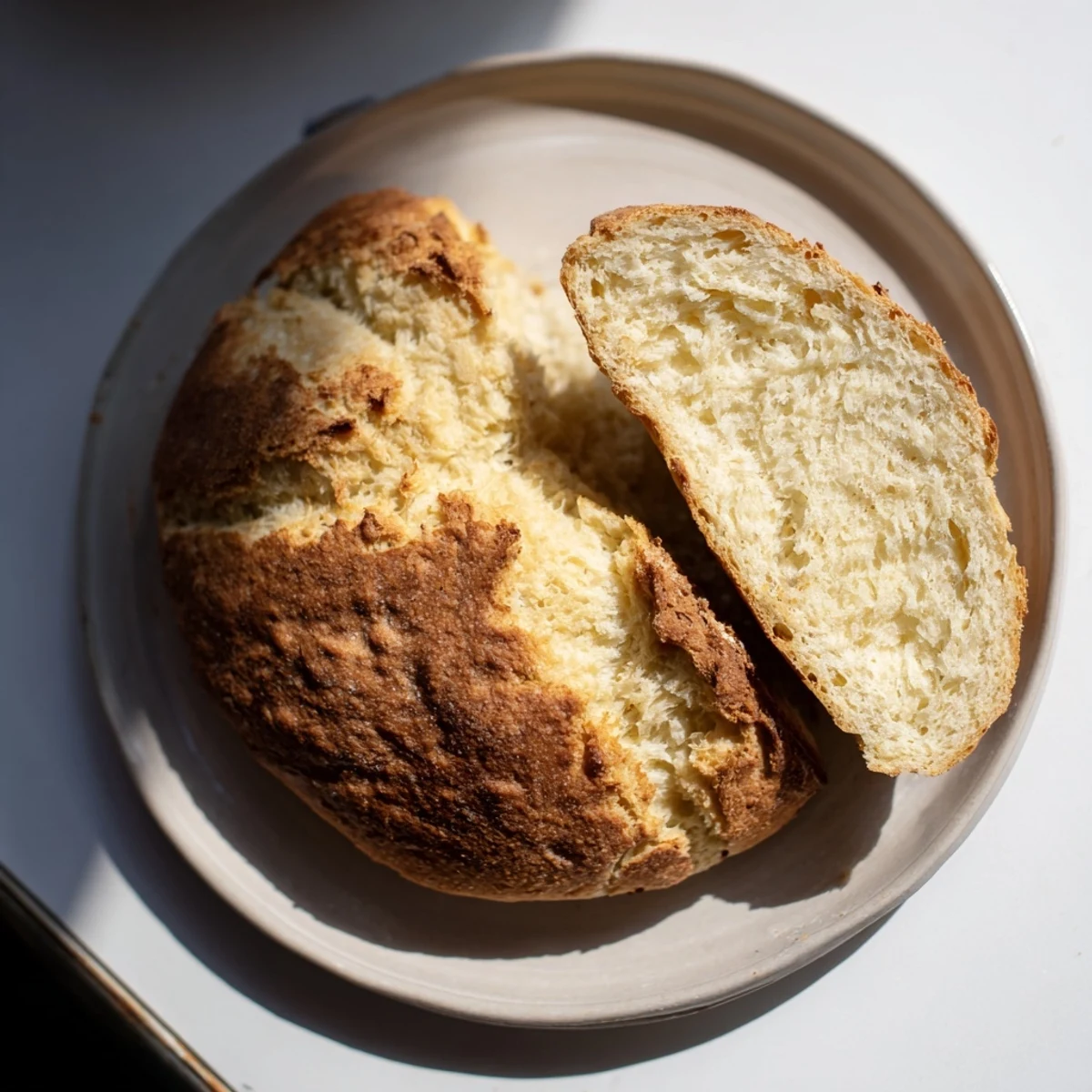
Save Discover a traditional Irish bread made with just four simple ingredients: flour, baking soda, salt, and buttermilk. This bread offers a golden crust with a tender, moist crumb inside. Preparation is straightforward—mix dry and wet ingredients, knead gently, shape, score, and bake until golden and hollow. Ideal for breakfast or paired with hearty stews, it brings rustic charm and comforting flavors to your table in less than an hour.
The smell of this bread baking takes me straight back to a tiny kitchen in County Cork, where my grandmother taught me that some of the best things in life need only four ingredients and a willing pair of hands. She worked by instinct, measuring flour by the handful and listening for the perfect hiss when buttermilk hit the dry ingredients. That afternoon, with rain tapping against the windowpane, I learned that soda bread isn't just about sustenance—it's about the kind of alchemy that happens when you stop overthinking and simply trust your senses.
Last winter, during a snowstorm that kept us housebound for three days, my children and I made loaf after loaf of this bread, experimenting with different flours and add-ins until we found our family's perfect version. We ate it warm with butter melting into the crevices, paired with tomato soup that simmered on the back burner all afternoon. Those snow days taught me that the simplest recipes often create the most lasting memories, precisely because they invite you to make them your own without fear of failure.
Ingredients
- All-purpose flour: The backbone of this bread, providing structure and that characteristic tender crumb Irish soda bread is known for
- Baking soda: Works with the acidic buttermilk to create the rise, giving the bread its signature texture without any yeast
- Fine sea salt: Enhances flavor and helps strengthen the gluten network for better structure
- Buttermilk: The essential acidic ingredient that activates the baking soda while adding subtle tang and moisture
Instructions
- Heat the oven:
- Preheat to 425°F (220°C) and prepare your baking sheet with parchment paper or a light dusting of flour, so nothing sticks when you're ready to bake.
- Whisk the dry ingredients:
- In a large bowl, combine the flour, baking soda, and salt until everything is evenly distributed and no clumps remain.
- Combine the dough:
- Make a deep well in the center of the flour mixture, pour in the buttermilk, and stir gently with a wooden spoon just until a shaggy, rough dough comes together.
- Shape the loaf:
- Turn the dough onto a lightly floured surface, pat it together gently without overworking, and form a round, slightly flattened loaf about 2 inches thick.
- Score and bake:
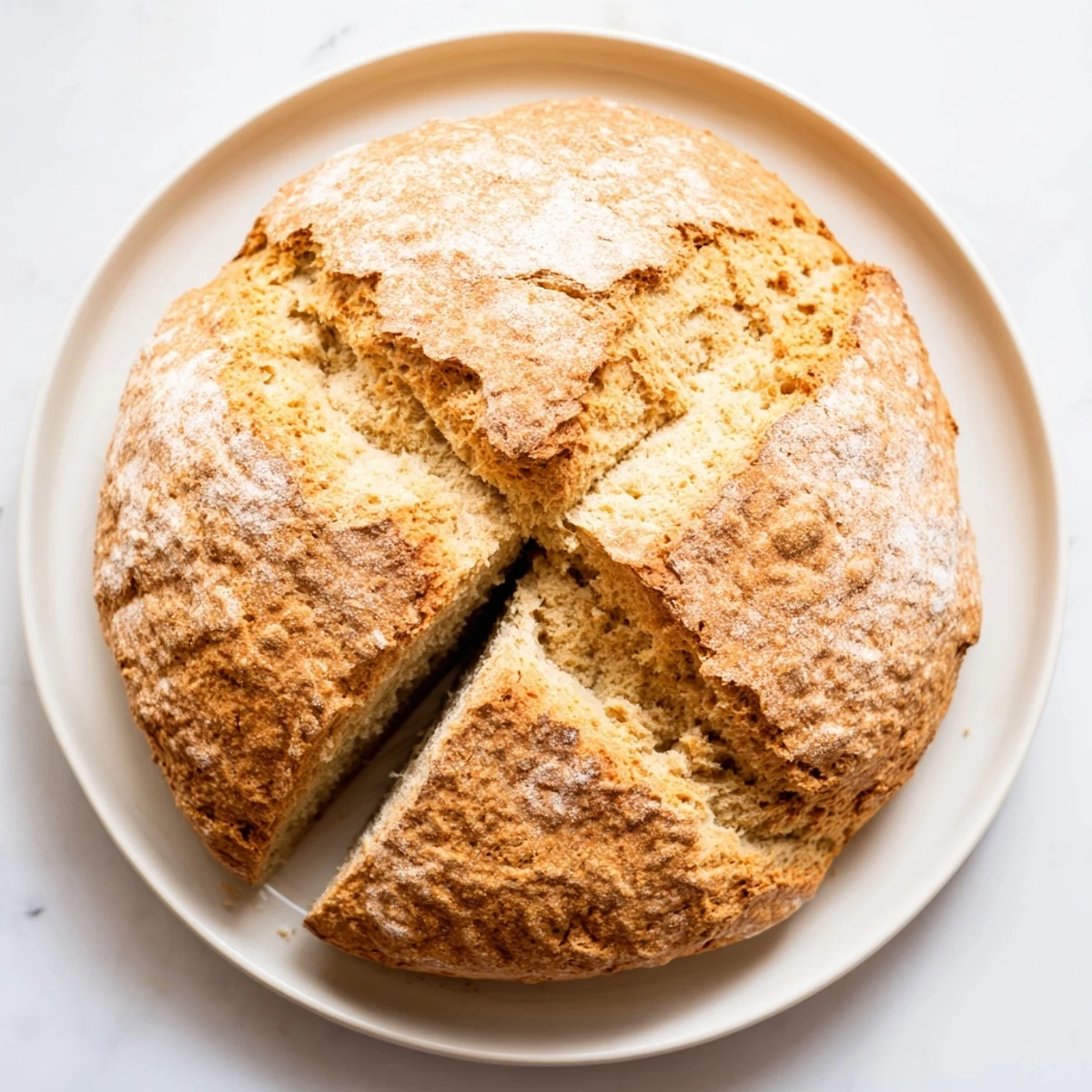
- Cut a deep X across the top with a sharp knife, transfer to your prepared baking sheet, and bake for 30–35 minutes until golden and hollow-sounding when tapped.
- Cool completely:
- Let the bread rest on a wire rack for at least 30 minutes before slicing—this crucial step prevents the interior from becoming gummy.
 Save
Save My friend Sarah, who had never baked anything from scratch before, made this bread during a dinner party at her apartment last spring. She was so nervous she called me three times while it was in the oven, but when she pulled that golden loaf out and her guests literally gasped, something shifted in how she saw herself in the kitchen. Now she makes it every Sunday, and her children have started asking for that 'magic bread' by name.
Making It Your Own
Once youve mastered the basic recipe, try swapping half the all-purpose flour for whole wheat flour to add nuttiness and depth. I've found that adding a handful of raisins or caraway seeds transforms this into something entirely different while still honoring the traditional spirit. The beauty of soda bread lies in its forgiveness—it welcomes experimentation without demanding perfection.
The Buttermilk Secret
Real buttermilk makes a noticeable difference, but I've been caught without it enough times to know the milk-and-vinegar trick works beautifully in a pinch. Let the mixture sit for five full minutes before adding it to your flour, and you'll get the same chemical reaction that makes this bread rise so reliably. Fresh buttermilk yields the most tender crumb, so use it if you can find it.
Serving Suggestions
This bread is at its absolute best when still slightly warm, slathered with salted butter that melts into every crevice. It pairs beautifully with hearty stews and soups, but I've been known to eat it plain, standing right over the cutting board. The texture changes as it ages, making it perfect for toast the next morning or even breadcrumbs later in the week.
- Wrap leftover bread in a clean tea towel rather than plastic to maintain the perfect crust
- Revive slightly stale slices by toasting them until golden and crisp
- The X cut you made before baking also helps when slicing—follow those lines
 Save
Save There's something profoundly satisfying about turning four humble ingredients into bread that feeds both body and soul. May your kitchen be filled with the scent of baking and the warmth of shared meals.
Recipe FAQs
- → What makes Irish soda bread unique?
-
Irish soda bread uses baking soda as a leavening agent instead of yeast, giving it a distinct texture and quick preparation.
- → Can I substitute buttermilk in this bread?
-
Yes, combine milk with lemon juice or vinegar and let it sit for 5 minutes to mimic buttermilk’s acidity.
- → How do I know when the bread is fully baked?
-
The bread should be golden brown and sound hollow when tapped on the bottom.
- → Is it necessary to knead the dough extensively?
-
No, only gentle kneading until the dough just comes together is recommended to keep the crumb tender.
- → Can whole wheat flour be used in this bread?
-
Yes, substituting half of the all-purpose flour with whole wheat adds richer flavor and texture.